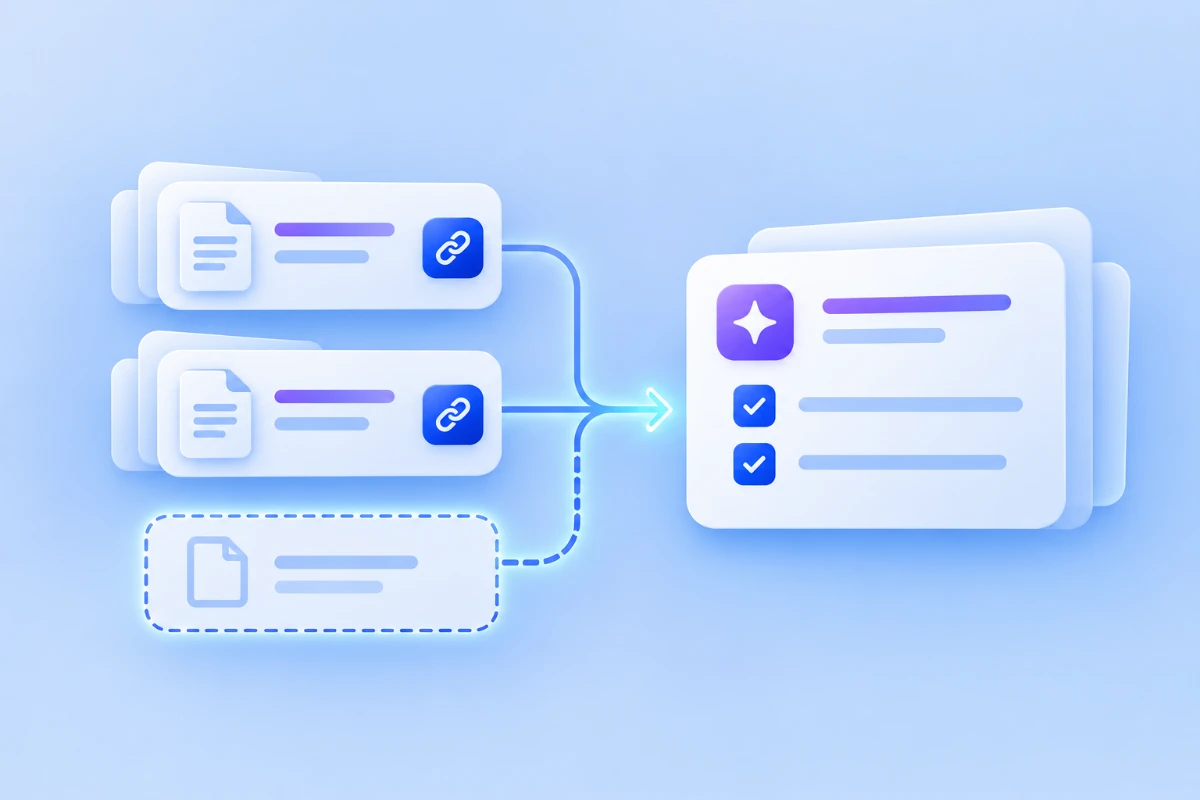
After reading a GEO report, the team should be able to name the next page to improve, the evidence behind that choice and the condition that will count as finished. A longer content queue is not necessarily progress. Start with a few findings you can verify, then turn each into a task a specific owner can complete.
Validate findings before putting them in the queue
For each finding, collect the customer question, full answer, date, platform, competitor and exact cited page. Check the underlying passage against current product facts. If a report only says “low visibility” or “insufficient authority,” it has not yet identified an editable problem. Ask which customer requirement lacks an answer and where that answer should live.
Check measurement changes before assigning editorial work. A decline caused by new questions or failed collection belongs first with the monitoring owner. Correcting the website cannot recover missing answers or make two different samples comparable. An isolated omission can remain an investigation item until repeated observations or a clear factual error justify a task.
The examples below concern a hypothetical packaging supplier. It can fulfil a particular 300-unit order, but its public information is incomplete. The findings and schedule illustrate task planning; they are not a real audit or evidence of a resulting increase in visibility.
Rank work by the buying decision it affects
An inaccurate delivery promise can create an unsuitable enquiry today. A missing minimum quantity leaves a qualified buyer unable to check fit. A broad industry article may be useful later, but without a specific information gap it has a weaker claim on the same team’s time. Consider impact, strength of evidence, dependencies and effort together rather than ranking tasks by citation count alone.
| Verified finding | Priority and reason | Owner and destination | Completion evidence |
|---|---|---|---|
| An old delivery page is cited as a current promise. | First: it can change an order decision. | Operations confirms terms; editor updates that URL. | Current terms are visible beside the dated old offer. |
| The product supports 300 units, but the page omits the limit. | Next: relevant facts exist and can be published. | Product owner approves; editor updates the product page. | The quantity and process restrictions are explicit. |
| An independent comparison uses an outdated specification. | Start outreach; completion depends on its editor. | Marketing sends the exact correction and current source. | Check the published revision if the editor accepts it. |
| A single broad question omits the brand, with no verified gap. | Investigate before commissioning content. | Monitoring owner reviews comparable answers. | Identify a specific requirement or keep the item unresolved. |
Write a task that can be completed without another briefing
Replace “improve the packaging page” with the exact missing condition and the material needed to publish it. The editor should not have to reopen an entire report to discover what the task means. Attach the original answer, source URL and approved product facts to the brief; record unresolved facts as dependencies.
- Task: clarify the 300-unit ordering conditions on the existing skincare-carton product page. Target: the exact current product URL, not a newly invented landing page.
- Evidence: the buyer asks about 300 units and delivery to Germany; the page says only “flexible customization.” Attach the captured question and passage. Treat this as missing information, not proof that the omission caused the AI result.
- Deliverable: a short ordering section stating the applicable carton, print method, minimum quantity and information required for a delivery quote. Link the relevant category page to it.
- Responsibilities: the product owner verifies the limits; operations verifies the delivery process; the editor publishes. A practical schedule could reserve the first two days for fact checks and the next day for the edit, subject to those owners’ availability.
- Acceptance: a colleague can answer whether this order qualifies and what is still required for a quote, using the page alone. Save the approved text, live URL and publication time.
Update an existing page when it already owns the buying question. Create a new article when the reader needs a separate explanation or comparison that would overburden the product page. Third-party publication makes sense when an appropriate external source can add useful evidence or reach; it is not an automatic next step for every missing mention.
When working from AskScope recommendations, retain the linked answer and citation evidence in the task brief. Review factual claims before publishing any generated draft. A tool can organise findings and assist production; approval of product conditions and completion of website changes still need named owners.
Separate delivery checks, AI observations and business outcomes
Review the work at three levels. First, confirm the page is live, accessible and accurate. Next, rerun the affected questions under the recorded conditions and inspect inclusion, wording and citations. Finally, review identifiable visits and qualified enquiries. A page can pass editorial acceptance before an AI system changes its answer; the task record should preserve that distinction.
Set a first review date that fits the monitoring cadence, and allow for public-page discovery and update delays. There is no fixed number of days after which a revision must appear in an AI answer. At the first review, check that the edited URL can be reached before deciding to rewrite it again. Keep the original question set stable for subsequent observations.
If the answer corrects the minimum quantity but still omits the brand, record the factual improvement and leave shortlist inclusion open. If nothing changes across later checks, revisit the source support and product fit. If referrals or enquiries rise, inspect their source and quality separately before linking that movement to the edit.
The next review note can be brief: which task was delivered, which facts changed in the answers, what remains unresolved and what evidence would justify more work. This lets the team continue, revise or stop a task without turning every report into another publishing quota.